
Introduction
Sanskrit is a highly ancient and beautiful language of the world. It has been applied to many old writings, prayers, and Indian legends. In case you are new to this field and are looking forward to learning Sanskrit, this manual will educate you from novice to hero!
Firstly, you will study the Sanskrit alphabet called वर्णमाला (Varṇamāla). It is made of vowels (स्वर) and consonants (व्यंजन). You will also study how to combine these letters to form simple words. For example, if you combine क + अ, it becomes क (ka), and क + इ is कि (ki).
Sanskrit Vowels And Consonants | Learn Basic Of Sanskrit
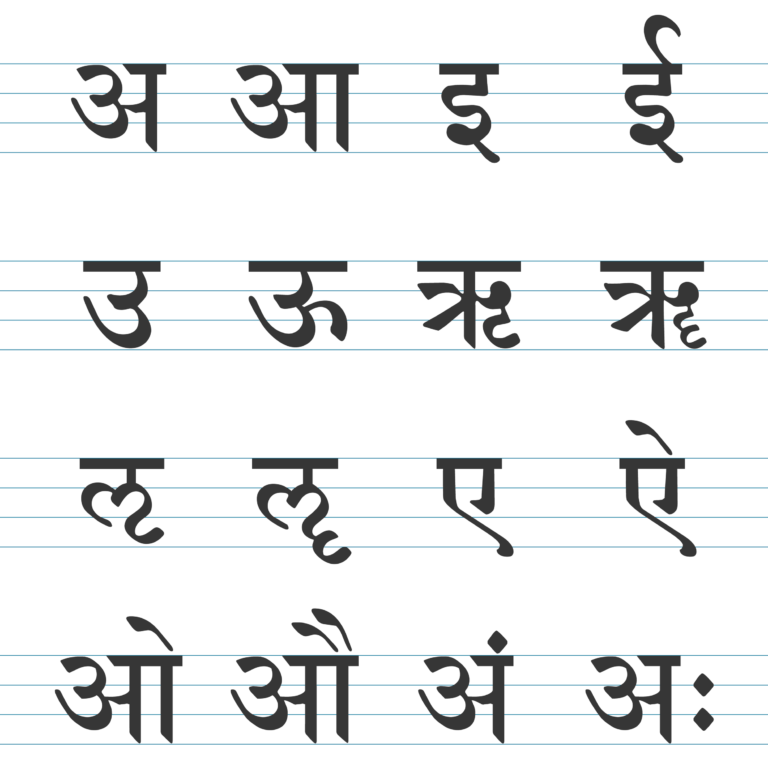
🕉️ Sanskrit Vowels (स्वर)
Short & Long Vowels
🕉️ Sanskrit Consonants (व्यंजन)
क वर्ग (Gutturals)
च वर्ग (Palatals)
ट वर्ग (Retroflex)
त वर्ग (Dentals)
प वर्ग (Labials)
अन्तःस्थ व्यंजन (Semi-Vowels)
ऊष्म व्यंजन (Sibilants & Aspirate)
How letter forms ?
Learning these combinations—e.g., कू + अ = क, क + इ = कि, or कू + ऐ = कै—helps learners of Sanskrit write, read, and speak the words of Sanskrit properly. Such basic information is specially helpful for good chanting, reading old manuscripts, or simply developing good writing habits in Sanskrit. You are a student, teacher, or language learner; learning these combinations of Sanskrit letters will take you one step closer to expert from novice.
Forming Of ” क ” Connected Letters
- कू+ अ = क
- कू+आ = का
- क+ इ = कि
- कृ+ई = की
- के+उ = कु
- कू+ऊ = कू
- कू +ऋ = कृ
- कू+ त् = कृ
- कू+ए = के
- कू+ऐ = कै
- क+ओ = को
- कु+औ = कौ
Forming Of ” ख ” Connected Letters
- खु + अ = ख
- खु + आ = खा
- खू + इ = खि
- खू + ई = खी
- खु + उ = खु
- खू + ऊ = खू
- खू + ऋ = खू
- खु + ऋ = खू
- खू + ए = खे
- खू + ऐ = खै
- खू + ओ = खो
- खु + औ = खौ
Anusvāra (after-sound) and Visarga (release)
Anusvara is marked by a dot above a letter and usually represents a nasal sound, “m” or “n”, depending on the context. For example, in the word अहं (ahaṁ), anusvara produces a nasal “m” sound. It marks a nasalization of the preceding vowel and differs phonetically depending on the class of consonant that follows (gutturals, palatals, etc.).
Anusvara
- क् + अं → कं / कम्
- कू + आं → कां / काम्
- कू + इं → किं / किम्
Visarga
- क् + अः → कः / कहूः
- कू + आः → का: / काहः
- कू + इः → कि: / किहिः
Anusvāra & Visarga in Sanskrit
Note: Here, “ह” is written to explain the pronunciation of the visarga.
The use of “ह” in written form is not allowed.
What is Conjunct Consonant ?
In Sanskrit, संयुक्त वर्ण (Saṁyukta Varṇa) are conjunct letters formed by two or more consonants in combination together without an interposed vowel. They are required for writing and reading Sanskrit properly since the majority of words use complex groups of consonants which must be merged together.
- क + ष = क्ष
- त् + र = त्र
- ज् + ञ = ज्ञ
Other compound letters
- कू + र = क्र
- वू + र = व्र
- रू + ग = ग्र
- रू + क = क्र
- कू + र = कृ
- वू + र = वृ
- र् + ग = ग्र
- र् + क = क्र
- श् + र = श्र
- त् + त = त्त
- ड् + क = ङ्क
- ड् + ग = ङ्ग
What is the Use Gender लिङ्ग In Sanskrit ?
➤ In the Sanskrit language, there are three types of gender classifications – masculine (pullinga), feminine (strilinga), and neuter (napumsakalinga).
In Sanskrit, the gender is not determined by looking at the object, but by examining the word itself.
❖ पुल्लिङ्ग ➤
- रामः, कृष्णः, समुद्रः, दीपः, परागः, तटः
❖ स्त्रीलिङ्ग ➤
- नारी, सीता, शिला, नदी, शय्या, नौका
❖ नपुंसकलिङ्ग ➤
- पुष्पम्, वनम्, मित्रम्, जलम्
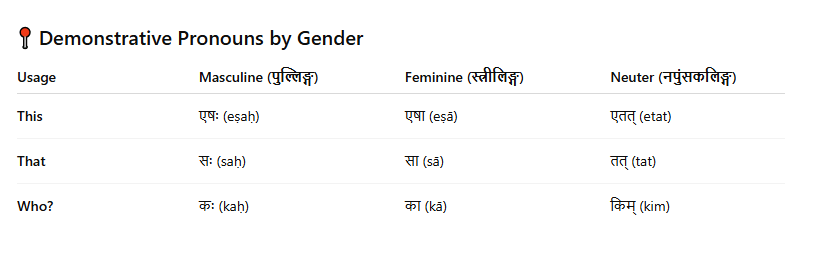
Use Of Related Words For पुल्लिङ्ग, स्त्रीलिङ्ग And नपुंसकलिङ्ग Is Given Below
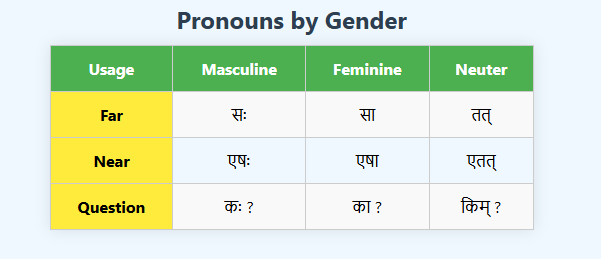
To indicate something far
- सः | सा | तत्
To indicate something near
- एषः | एषा | एतत्
How to Question
- कः ? | का ? | किम् ?
How to Asking questions and give answers ?
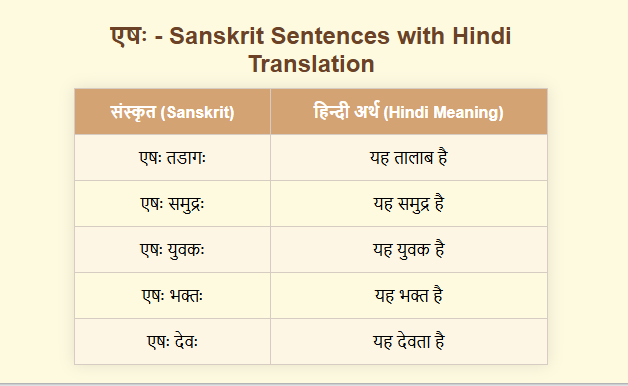
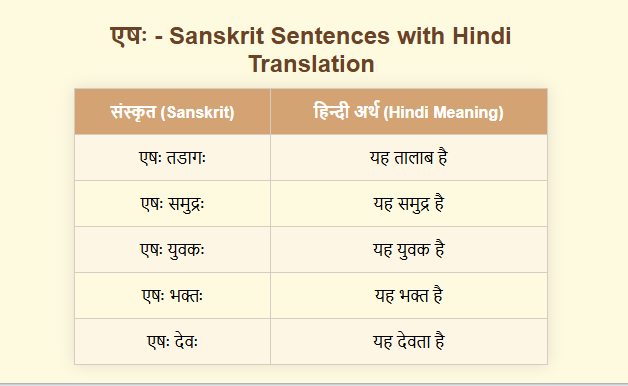
Question एषः कः ?
Answers for Masculine ( पुंलिङ्ग) gender
- एषः तडागः
- एषः समुद्रः
- एषः युवकः
- एषः भक्तः
- एषः देवः
Answers for Feminine (स्त्रीलिङ्ग) Gender
- एषा का ?
- एषा सीता
- एषा माला
- एषा महिला
- एषा देवी
- एषा युवती
Answers for (नपुंसकलिङ्ग) Neuter Gender
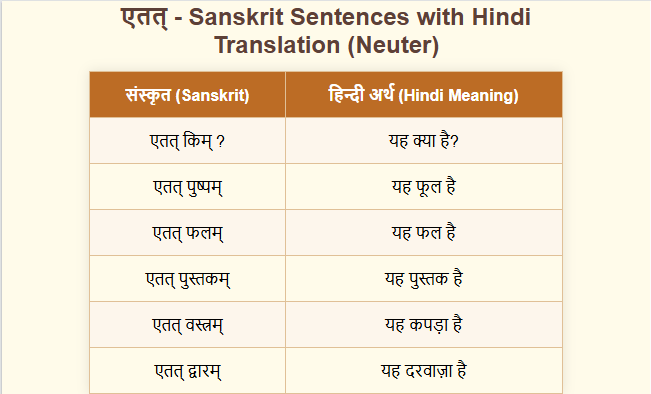
**एतत् किम् ?**
→ एतत् पुष्पम्
→ एतत् फलम्
→ एतत् पुस्तकम्
→ एतत् वस्त्रम्
→ एतत् द्वारम्
****
How TO Question To Male (पुल्लिङ्ग ) ?
Question सः कः ?
Answers
→सः तडागः
→सः समुद्रः
→सः युवकः
→सः भक्तः
→सः देवः
How to Question To Male (स्त्रीलिङ्ग ) ?
Question :- सा का ?
Answers
→ सा सीता
→ सा माला
→ सा महिला
→ सा देवी
→ सा युवती
How TO Question To Male (नपुंसकलिङ्ग ) ?
Question:- तत् किम् ?
Answers
→ तत् पुष्पम्
→ तत् फलम्
→ तत् पुस्तकम्
→ तत् वस्त्रम्
→ तत् द्वारम्
How does Sentence Forms In Sanskrit ?(वाक्यनिर्माणम् )
To form a sentence, a subject, an object, and a verb are required.
Subject = कर्ता
Object = कर्म
Verb = क्रिया
- Ram reads a book. — रामः पुस्तकं पठति।
- Ram goes home. — रामः गृहं गच्छति।
- Ram does work. — रामः कार्यं करोति।
- Ram eats rice. — रामः ओदनं खादति।
- Ram reads a book. — रामः पुस्तकं पठति।
Who has read? — Ram has read.
What has been read? — A book has been read.
What action has been done? — Reading has been done.
The one who reads is the subject (कर्ता).
That which is read is the object (कर्म).
The action done is the verb (क्रिया).
What is Subject And Verb in samkrita ?
In Sanskrit language, there are three numbers: singular, dual, and plural.
Singular is used to refer to only one object.
Dual is used when referring to two objects, and plural is used when referring to three or more objects.
In Sanskrit, there are three persons: first person, second person, and third person.
How to Introduce Self In Sanskrit ?
- अहं बालिका अस्मि। – I am a girl.
- अहं छात्रः अस्मि। – I am a student.
- मम नाम सागरः अस्ति। – My name is Sagar.
- अहं नववर्षीयः बालकः अस्मि। – I am a 9-year-old boy.
- मम जन्मदिवसः जूनमासे सप्तदशदिनाङ्के अस्ति। – My birthday is on June 17.
- अहं पञ्चमकक्षायां पठामि। – I study in fifth grade.
- मम संस्कृतं बहु रोचते। – I like Sanskrit very much.
- अहं मुम्बई नगरे वसामि। – I live in Mumbai.
- मम गृहे चत्वारः जनाः सन्ति। – There are four people in my family.
- मम मातुः नाम राधा अस्ति। – My mother’s name is Radha.
- मम प्रियसखी मान्या अस्ति। – My best friend is Manya.
- मम प्रियः वर्णः रक्तः अस्ति। – My favorite color is red.
- अहं वैज्ञानिकः भवितुम् इच्छामि। – I want to become a scientist.
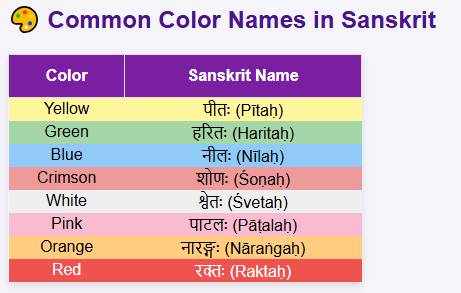
What is Colour Names In Sanskrit:
- पीतः – Yellow
- हरितः – Green
- नीलः – Blue
- शोणः – Crimson
- श्वेतः – White
- पाटलः – Pink
- नारङ्गः – Orange
अहं वैज्ञानिकः भवितुम् इच्छामि।
I want to become a scientist.
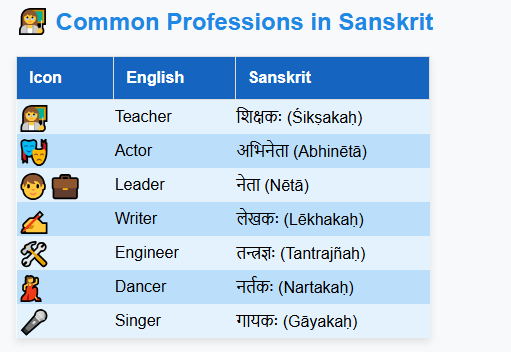
How to say Professions In Sanskrit ?
- शिक्षकः – Teacher
- अभिनेता – Actor
- नेता – Leader
- लेखकः – Writer
- तन्त्रज्ञः – Engineer (or technologist)
- नर्तकः – Dancer
- गायकः – Singer

Similar Posts
Sanskrit Vowels And Consonants | Learn Basic Of Sanskrit
Introduction Learning Sanskrit vowels can be a headache for English speakers but we have to simplify it. We know that vowels, alphabets, etc are the backbone of any language so we have to learn and memorize it.We also posted in in Roman language so that it will be easier for readers. In this article, we…

Falam Shabda Roop in Sanskrit – Complete Guide with Easy Examples
Sabda Roop of वनम्, मन्दिरम्, यानम्, पुस्तकम् | Sanskrit Grammar Table Sabda Roop of वनम्, मन्दिरम्, यानम्, पुस्तकम् in Sanskrit You can easily make the शब्द रूप of वनम्, मन्दिरम्, यानम्, and पुस्तकम् by following the Roop of फलम्. फलम् शब्द रूप (Roop Table) विभक्ति (Vibhakti) एकवचन (Singular) द्विवचन (Dual) बहुवचन (Plural) प्रथमा (Nominative) फलम्…
Hari Shabda Roop in Sanskrit – Complete Forms with Hindi
Sanskrit Declension of the Word “Hari” (हरि) Sanskrit Declension Table Here is the declension of the word “Hari” (हरि) in Sanskrit, including its forms in singular, dual, and plural in different cases. Case (विभक्ति) Singular (एकवचन) Dual (द्विवचन) Plural (बहुवचन) Prathama (Nominative) हरि: हरी हरय: Dvitīya (Accusative) हरिम् हरी हरीन् Tr̥tīya (Instrumental) हरिणा हरिभ्याम् हरिभिः…
Quiz Sanskrit
Sanskrit Quiz Submit Quiz 🧠 Sanskrit Quiz 1. What is the Sanskrit word for ‘Water’? Vāyu Jalam Agni 2. ‘अहं गच्छामि’ means? I sleep I eat I go 3. What is the Sanskrit word for ‘Sun’? Soma Sūrya Candra 4. ‘शुभ रात्रि’ means? Good Night Good Morning Good Afternoon 5. What is the Sanskrit word…
Birthday Wishes in Sanskrit
Introduction Birthday is the popular culture in India, which is inspired from western culture. If you don’t have any idea about how to wish in Sanskrit, then we will provide some ideas in this post. The major difference is that western people off the candle by blowing it but people from Hindu light it. Wishing…
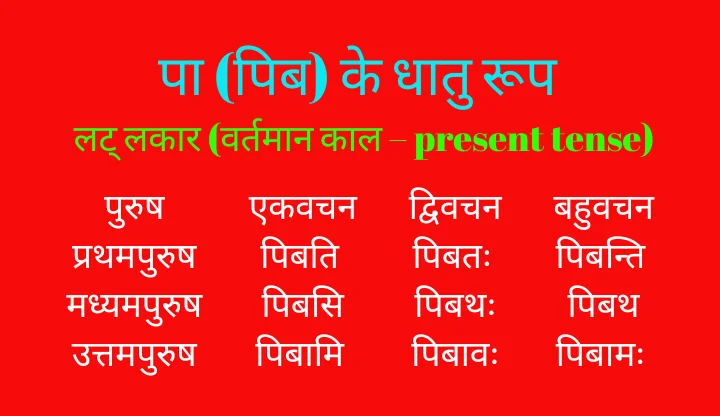
Persons In Sanskrit- धातु रुप (प्रथमपुरुष, मध्यमपुरुष, उत्तमपुरुष)
Introduction: You have learn person in english as i/we as 1st, you for 2nd and he/she for 3rd. Sanskrit have different approach for the person. It have 1st person, medium person and best person.प्रथम पुरुष, मध्यपुरुष, उत्तमपुरुष. In this article, we are going to describe about hose three persons in sanskrit. It can be bit…