
Introduction
Sanskrit is a highly ancient and beautiful language of the world. It has been applied to many old writings, prayers, and Indian legends. In case you are new to this field and are looking forward to learning Sanskrit, this manual will educate you from novice to hero!
Firstly, you will study the Sanskrit alphabet called वर्णमाला (Varṇamāla). It is made of vowels (स्वर) and consonants (व्यंजन). You will also study how to combine these letters to form simple words. For example, if you combine क + अ, it becomes क (ka), and क + इ is कि (ki).
Sanskrit Vowels And Consonants | Learn Basic Of Sanskrit
🕉️ Sanskrit Vowels (स्वर)
Short & Long Vowels
🕉️ Sanskrit Consonants (व्यंजन)
क वर्ग (Gutturals)
च वर्ग (Palatals)
ट वर्ग (Retroflex)
त वर्ग (Dentals)
प वर्ग (Labials)
अन्तःस्थ व्यंजन (Semi-Vowels)
ऊष्म व्यंजन (Sibilants & Aspirate)
How letter forms ?
Learning these combinations—e.g., कू + अ = क, क + इ = कि, or कू + ऐ = कै—helps learners of Sanskrit write, read, and speak the words of Sanskrit properly. Such basic information is specially helpful for good chanting, reading old manuscripts, or simply developing good writing habits in Sanskrit. You are a student, teacher, or language learner; learning these combinations of Sanskrit letters will take you one step closer to expert from novice.
Forming Of ” क ” Connected Letters
- कू+ अ = क
- कू+आ = का
- क+ इ = कि
- कृ+ई = की
- के+उ = कु
- कू+ऊ = कू
- कू +ऋ = कृ
- कू+ त् = कृ
- कू+ए = के
- कू+ऐ = कै
- क+ओ = को
- कु+औ = कौ
Forming Of ” ख ” Connected Letters
- खु + अ = ख
- खु + आ = खा
- खू + इ = खि
- खू + ई = खी
- खु + उ = खु
- खू + ऊ = खू
- खू + ऋ = खू
- खु + ऋ = खू
- खू + ए = खे
- खू + ऐ = खै
- खू + ओ = खो
- खु + औ = खौ
Anusvāra (after-sound) and Visarga (release)
Anusvara is marked by a dot above a letter and usually represents a nasal sound, “m” or “n”, depending on the context. For example, in the word अहं (ahaṁ), anusvara produces a nasal “m” sound. It marks a nasalization of the preceding vowel and differs phonetically depending on the class of consonant that follows (gutturals, palatals, etc.).
Anusvara
- क् + अं → कं / कम्
- कू + आं → कां / काम्
- कू + इं → किं / किम्
Visarga
- क् + अः → कः / कहूः
- कू + आः → का: / काहः
- कू + इः → कि: / किहिः
Anusvāra & Visarga in Sanskrit
Note: Here, “ह” is written to explain the pronunciation of the visarga.
The use of “ह” in written form is not allowed.
What is Conjunct Consonant ?
In Sanskrit, संयुक्त वर्ण (Saṁyukta Varṇa) are conjunct letters formed by two or more consonants in combination together without an interposed vowel. They are required for writing and reading Sanskrit properly since the majority of words use complex groups of consonants which must be merged together.
- क + ष = क्ष
- त् + र = त्र
- ज् + ञ = ज्ञ
Other compound letters
- कू + र = क्र
- वू + र = व्र
- रू + ग = ग्र
- रू + क = क्र
- कू + र = कृ
- वू + र = वृ
- र् + ग = ग्र
- र् + क = क्र
- श् + र = श्र
- त् + त = त्त
- ड् + क = ङ्क
- ड् + ग = ङ्ग
What is the Use Gender लिङ्ग In Sanskrit ?
➤ In the Sanskrit language, there are three types of gender classifications – masculine (pullinga), feminine (strilinga), and neuter (napumsakalinga).
In Sanskrit, the gender is not determined by looking at the object, but by examining the word itself.
❖ पुल्लिङ्ग ➤
- रामः, कृष्णः, समुद्रः, दीपः, परागः, तटः
❖ स्त्रीलिङ्ग ➤
- नारी, सीता, शिला, नदी, शय्या, नौका
❖ नपुंसकलिङ्ग ➤
- पुष्पम्, वनम्, मित्रम्, जलम्
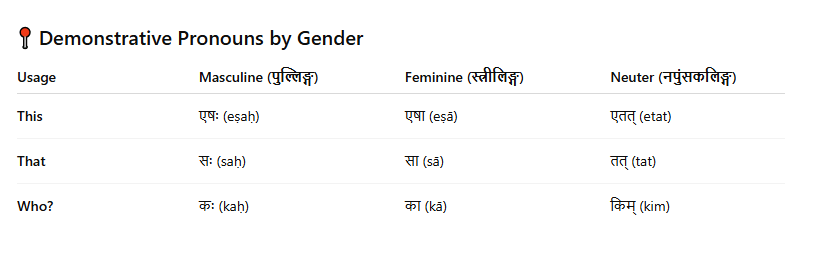
Use Of Related Words For पुल्लिङ्ग, स्त्रीलिङ्ग And नपुंसकलिङ्ग Is Given Below
To indicate something far
- सः | सा | तत्
To indicate something near
- एषः | एषा | एतत्
How to Question
- कः ? | का ? | किम् ?
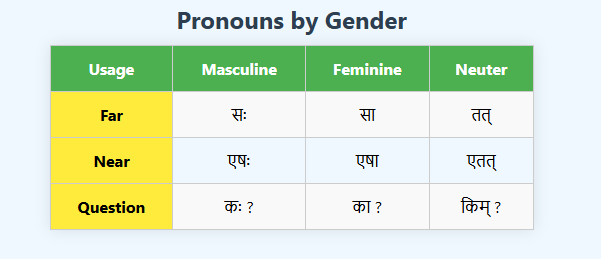
How to Asking questions and give answers ?
Question एषः कः ?
Answers for Masculine ( पुंलिङ्ग) gender
- एषः तडागः
- एषः समुद्रः
- एषः युवकः
- एषः भक्तः
- एषः देवः
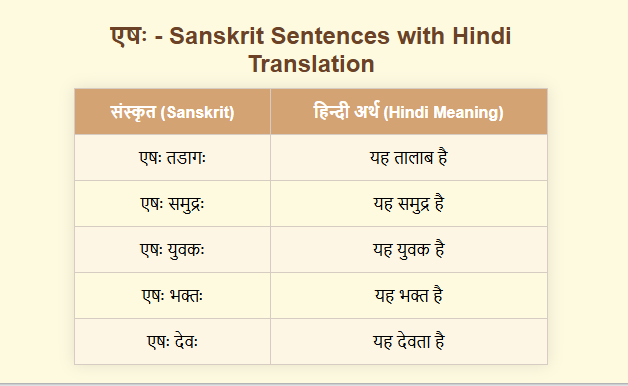
Answers for Feminine (स्त्रीलिङ्ग) Gender
- एषा का ?
- एषा सीता
- एषा माला
- एषा महिला
- एषा देवी
- एषा युवती
Answers for (नपुंसकलिङ्ग) Neuter Gender
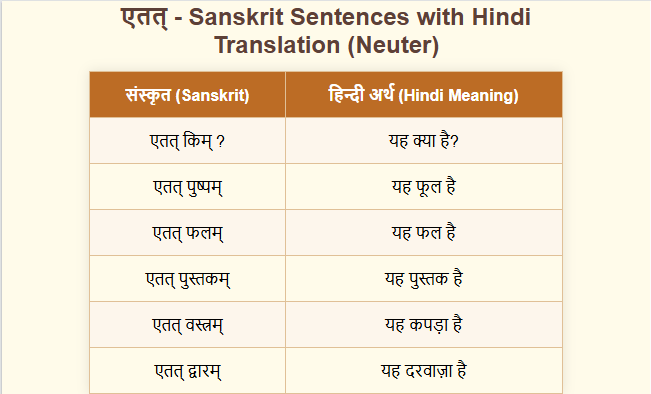
**एतत् किम् ?**
→ एतत् पुष्पम्
→ एतत् फलम्
→ एतत् पुस्तकम्
→ एतत् वस्त्रम्
→ एतत् द्वारम्
****
How TO Question To Male (पुल्लिङ्ग ) ?
Question सः कः ?
Answers
→सः तडागः
→सः समुद्रः
→सः युवकः
→सः भक्तः
→सः देवः
How to Question To Male (स्त्रीलिङ्ग ) ?
Question :- सा का ?
Answers
→ सा सीता
→ सा माला
→ सा महिला
→ सा देवी
→ सा युवती
How TO Question To Male (नपुंसकलिङ्ग ) ?
Question:- तत् किम् ?
Answers
→ तत् पुष्पम्
→ तत् फलम्
→ तत् पुस्तकम्
→ तत् वस्त्रम्
→ तत् द्वारम्
How does Sentence Forms In Sanskrit ?(वाक्यनिर्माणम् )
To form a sentence, a subject, an object, and a verb are required.
Subject = कर्ता
Object = कर्म
Verb = क्रिया
- Ram reads a book. — रामः पुस्तकं पठति।
- Ram goes home. — रामः गृहं गच्छति।
- Ram does work. — रामः कार्यं करोति।
- Ram eats rice. — रामः ओदनं खादति।
- Ram reads a book. — रामः पुस्तकं पठति।
Who has read? — Ram has read.
What has been read? — A book has been read.
What action has been done? — Reading has been done.
The one who reads is the subject (कर्ता).
That which is read is the object (कर्म).
The action done is the verb (क्रिया).
What is Subject And Verb in samkrita ?
In Sanskrit language, there are three numbers: singular, dual, and plural.
Singular is used to refer to only one object.
Dual is used when referring to two objects, and plural is used when referring to three or more objects.
In Sanskrit, there are three persons: first person, second person, and third person.
How to Introduce Self In Sanskrit ?
- अहं बालिका अस्मि। – I am a girl.
- अहं छात्रः अस्मि। – I am a student.
- मम नाम सागरः अस्ति। – My name is Sagar.
- अहं नववर्षीयः बालकः अस्मि। – I am a 9-year-old boy.
- मम जन्मदिवसः जूनमासे सप्तदशदिनाङ्के अस्ति। – My birthday is on June 17.
- अहं पञ्चमकक्षायां पठामि। – I study in fifth grade.
- मम संस्कृतं बहु रोचते। – I like Sanskrit very much.
- अहं मुम्बई नगरे वसामि। – I live in Mumbai.
- मम गृहे चत्वारः जनाः सन्ति। – There are four people in my family.
- मम मातुः नाम राधा अस्ति। – My mother’s name is Radha.
- मम प्रियसखी मान्या अस्ति। – My best friend is Manya.
- मम प्रियः वर्णः रक्तः अस्ति। – My favorite color is red.
- अहं वैज्ञानिकः भवितुम् इच्छामि। – I want to become a scientist.
What is Colour Names In Sanskrit:
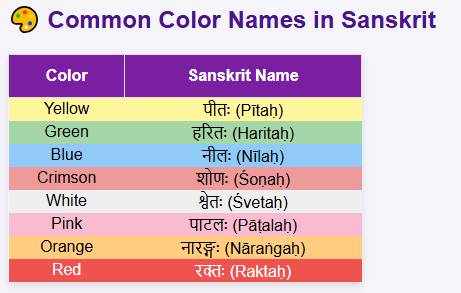
- पीतः – Yellow
- हरितः – Green
- नीलः – Blue
- शोणः – Crimson
- श्वेतः – White
- पाटलः – Pink
- नारङ्गः – Orange
अहं वैज्ञानिकः भवितुम् इच्छामि।
I want to become a scientist.
How to say Professions In Sanskrit ?
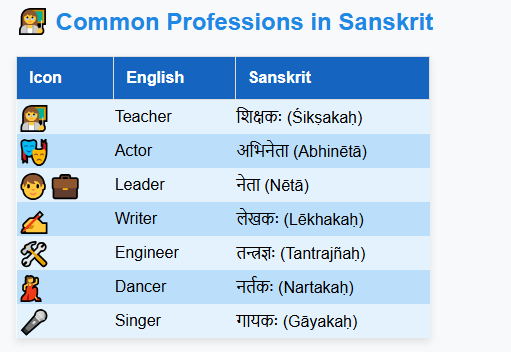
- शिक्षकः – Teacher
- अभिनेता – Actor
- नेता – Leader
- लेखकः – Writer
- तन्त्रज्ञः – Engineer (or technologist)
- नर्तकः – Dancer
- गायकः – Singer

Similar Posts

Must Know Basic Sanskrit Phrases | Quick and Easy Guide
Introduction Want to speak Sanskrit fluently? Start with these common Sanskrit phrases! Whether you’re a language enthusiast, a spiritual seeker, or a beginner in Sanskrit, familiarity with some everyday Sanskrit phrases can carry you far. In this manual, we provide you with over 30 Sanskrit phrases with Hindi and English meanings to make you speak…
How to Introduce Yourself in Sanskrit | Multiple Examples
Introduction Mastery of the introduction is the key to establishing rapport with others — and doing it in Sanskrit lends a touch of tradition, respect, and timelessness. To present oneself in Sanskrit is not just a matter of saying “My name is.” There are urbane options depending on whether you are addressing a man, a…

Ram Shabda Roop In Sanskrit
Introduction In Sanskrit, the word “Roop” is employed for the shape of a word. It is employed to describe how a noun, pronoun, or verb changes its shape depending on its position in a sentence. Ram is used mostly for masculine noun. Ram is Masculine ending in “a”. बालक, नृप, देव, गज, छात्र are popular…
लिङ्ग/ gender In Sanskrit
Introduction Sanskrit consists of three types of gender. They are male, female and gender neutral. We should not say the gender after seeing any material. We have to look for words and assign the gender category. The gender assignment is unique in this language. Sanskrit Names and Gender Forms Popular Masculine Names: Ram – रामः…
Best Inspirational Sanskrit Quotes For Students
Introduction Sanskrit quotes, also known as shlokas in Hindi, are verses from Bhagavad Geeta, Upanisad, Four Ved, Mahabharata, Chanakya Niti, and other ancient books. These texts are important to heal your bad event and implant new thoughts in daily life. Whether it’s a Vakratunda Mahakaya Sanskrita shloka or Geeta shloka in Sanskrit Karmanye Vadhikaraste, to…